
Loading...
Loading...
Selecting ammunition is not only about fitting a round into a firearm. It also shapes accuracy, recoil, reliability, and the kind of experience you get on the range or in the field.
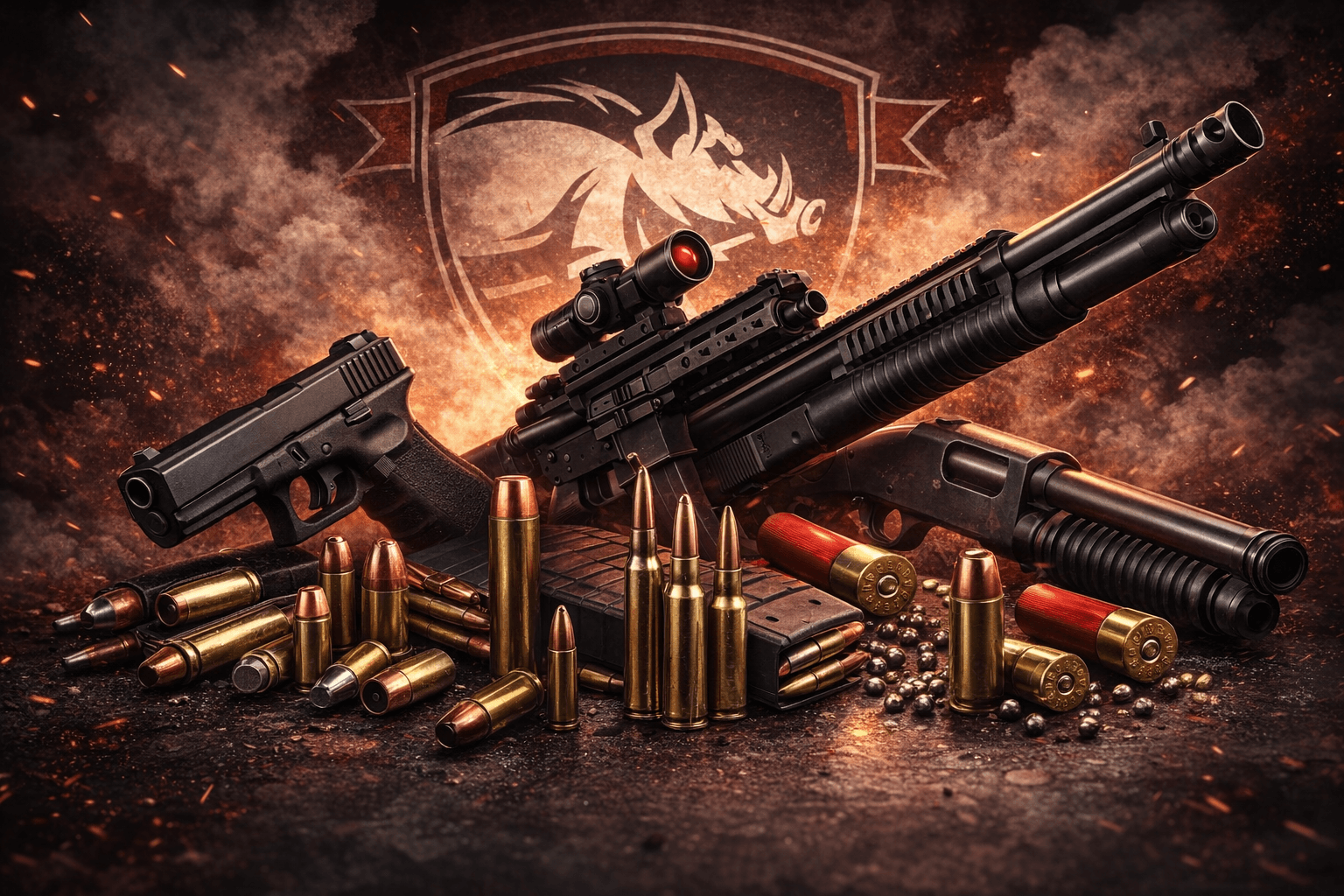
Ammunition types vary widely across handguns, rifles, and shotguns. Knowing the basic differences helps you make safer, smarter choices and match the right round to the right firearm.
Ammunition contains the components needed for a firearm to fire a projectile. These components usually include the case, primer, propellant, and projectile. In shotgun ammunition, the projectile may be a shot load, slug, or other specialized payload.
The first step is understanding that each firearm category uses its own standards. Handguns often use pistol cartridges such as 9mm or .45 ACP. Rifles may use cartridges such as .223 Remington, .308 Winchester, or .30-06 Springfield. Shotguns use gauge instead of caliber, with common choices like 12 gauge and 20 gauge.
| Firearm Type | Common Measurement | Common Examples | Typical Use |
|---|---|---|---|
| Handguns | Caliber | 9mm, .380 ACP, .45 ACP | Defense, training, range use |
| Rifles | Caliber | .223 Remington, .308 Winchester, .30-06 | Hunting, sport shooting, target work |
| Shotguns | Gauge | 12 gauge, 20 gauge, .410 bore | Hunting, sport shooting, home defense |
Handgun ammunition is designed for compact firearms that are carried, trained with, and used for close-range shooting. Common handgun rounds include 9mm, .40 S&W, .45 ACP, and .380 ACP. Each has its own recoil level, cost, and shooting feel.
For many shooters, 9mm is popular because it is widely available, generally affordable, and manageable in many handguns. Larger calibers may deliver more recoil, which can affect follow-up shots and comfort during longer range sessions. Smaller calibers may produce less recoil, but they can also offer different performance characteristics.
Firearm chambering, which must match the cartridge exactly.
Bullet type, such as full metal jacket, hollow point, or frangible.
Purpose, since range training and defensive use often call for different loads.
Manufacturer recommendations listed in the firearm manual.
Handgun ammunition should always match the firearm’s chamber marking. Even rounds that look similar can be unsafe or unusable in the wrong gun. A careful look at the barrel or slide markings saves time and helps prevent damage.
Rifle ammunition generally travels at higher velocities than handgun ammunition and is built for longer distances. That makes rifle cartridges a major choice for hunting, precision shooting, and field use. Common rifle rounds include .223 Remington, .308 Winchester, 6.5 Creedmoor, and .30-06 Springfield.
Rifle ammo selection depends on the cartridge, bullet weight, and the intended job. Lighter bullets often move faster and may suit target shooting or smaller game. Heavier bullets may deliver deeper penetration and more energy, which matters in hunting and some field applications.
Target shooting at short, medium, and long range.
Hunting game of different sizes.
Practice with semi-automatic rifles or bolt action rifles.
Precision shooting where consistency matters.
Rifle ammunition also varies by rifle platform. An AR rifle may use .223 Remington or 5.56 NATO, depending on the chamber. A bolt action rifle may be chambered for larger hunting cartridges such as .308 Winchester or .30-06 Springfield. Matching the round to the chamber and barrel twist rate improves performance.
Rimfire ammunition is a category where the primer compound sits in the rim of the cartridge case. The most common rimfire round is .22 LR, and it remains one of the most popular choices for training, small-game hunting, and general plinking. Rimfire ammunition is often lighter, softer shooting, and less expensive than many centerfire options.
Its lower recoil makes it helpful for new shooters. It also makes long range sessions easier on the hands and wallet. Many shooters use rimfire rifles or handguns to practice fundamentals such as sight picture, trigger control, and follow-through.
Low recoil.
Lower cost in many markets.
Good for skill building.
Useful for small game and casual target shooting.
Rimfire ammo should be stored carefully because the priming compound is distributed differently than in centerfire cartridges. Clean storage, dry conditions, and proper rotation help preserve reliability over time.
Shotgun shells work differently from handgun and rifle cartridges. Instead of a single bullet, many shells carry multiple pellets, though some are loaded with a single slug. The most common shotgun gauges are 12 gauge, 20 gauge, and .410 bore.
Shotgun shell selection depends on the use. Birdshot spreads pellets widely and suits many clay and bird hunting jobs. Buckshot is often chosen for larger targets and defensive use. Slugs are used when a single projectile and greater distance are needed.
| Shell Type | Common Use | Characteristics |
|---|---|---|
| Birdshot | Clays, birds | Many small pellets, wider spread |
| Buckshot | Defense, larger game | Fewer, larger pellets |
| Slug | Hunting, accurate single-projectile shots | One large projectile |
Shotgun length matters too. A shotgun chamber marked for 2 3/4 inch shells may not safely accept 3 inch shells unless the firearm is built for that longer shell length. Checking the chamber marking is essential before buying or loading shells.
The right ammunition starts with the firearm’s chamber designation. A handgun chambered in 9mm should use 9mm cartridges. A rifle chambered in .223 Remington or 5.56 NATO should use the correct cartridge for that chamber. A 12 gauge shotgun needs 12 gauge shells of the proper length.
You also need to think about the job the ammo will do. Range sessions usually benefit from economical training ammunition. Hunting calls for loads built for the game and distance involved. Home defense loads are selected with reliability and terminal performance in mind.
Handguns: Match caliber, bullet type, and intended use.
Rifles: Match cartridge, velocity, bullet weight, and rifle chamber.
Shotguns: Match gauge, shell length, and payload type.
The firearm manual is the best starting point for any ammo choice. It gives chambering details, pressure limits, and any restrictions from the manufacturer. That information should guide every purchase.
Ammunition pricing can vary a lot based on caliber, brand, and demand. Common training rounds often cost less than specialty hunting or defensive loads. Availability also changes by region, so it helps to buy in practical quantities when you find a load that performs well.
Reliability matters just as much as cost. A budget-friendly round that cycles poorly or groups badly may create more frustration than value. Many shooters test a few brands before settling on one that runs consistently in their firearm.
Caliber or gauge.
Bullet or shot type.
Recoil level.
Price per round.
Intended use.
Firearm compatibility.
Storage also plays a major role. Ammunition should stay in a cool, dry place and away from moisture. Ammunition boxes, sealed ammo cans, and clear labeling help keep inventory organized and usable.
A new handgun owner with a 9mm pistol may start with full metal jacket ammo for range practice and later use hollow points for defensive carry, if allowed and appropriate for the firearm. A rifle shooter with a .223 chamber may choose lighter bullets for paper targets and slightly different loads for field use.
A shotgun owner with a 12 gauge pump action shotgun may keep birdshot for clay shooting, buckshot for defensive use, and slugs for certain hunting needs. A hunter using a bolt action rifle may prefer a cartridge with a heavier bullet for larger game. These examples show how the firearm and the intended use shape the ammo choice.
Choosing ammunition becomes simpler once you focus on three things: firearm chambering, intended use, and performance. Handguns, rifles, and shotguns each have distinct ammunition needs, and the right match improves both safety and results.
The best choice is the one that fits the firearm, supports your goal, and performs reliably every time you shoot.