
Loading...
Loading...
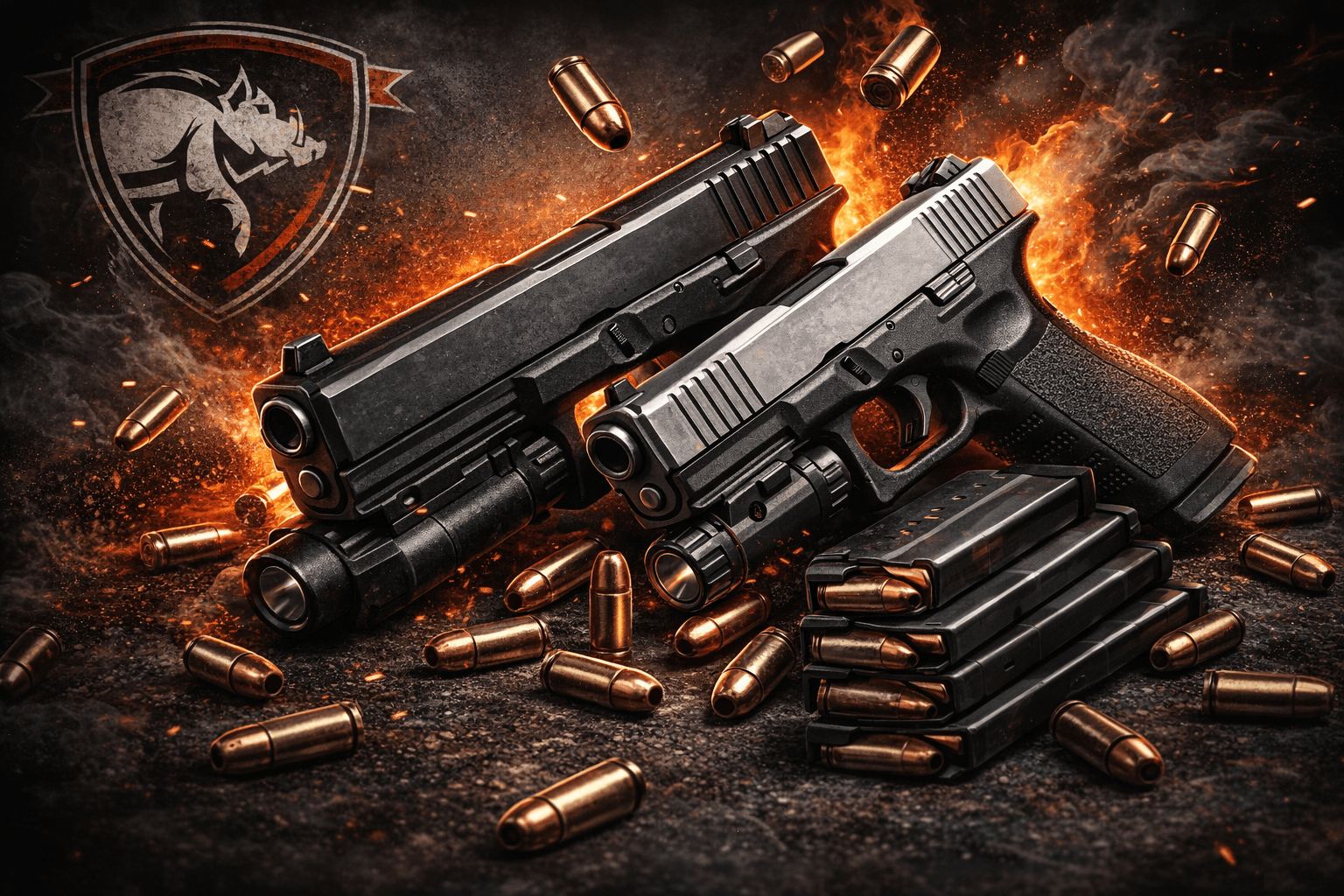
Handguns remain one of the most practical firearm categories for personal defense, training, and sport shooting. Semi-automatic handguns add fast follow-up shots, practical magazine capacity, and broad caliber choices.
This guide explains how handguns work, how semi-automatic models differ in design, and what matters when choosing one for lawful use, range time, or carry.
A handgun is a compact firearm built for use with one or two hands. It is small enough to carry more easily than a rifle or shotgun, yet still powerful enough for defense, target shooting, and competition. Many handguns fall into two major groups: revolvers and semi-automatic handguns.
Semi-automatic handguns are among the most common sidearms today. They use the energy from firing a cartridge to cycle the action, eject the spent casing, and chamber the next round. That process supports faster shooting and higher capacity than many other handgun types.
| Type | Action | Typical Capacity | Common Use |
|---|---|---|---|
| Revolver | Cylinder-based | 5 to 8 rounds | Defense, range use, simplicity |
| Semi-automatic handgun | Self-loading | 6 to 20+ rounds | Defense, training, competition |
| Subcompact handgun | Semi-automatic | 6 to 12 rounds | Concealed carry |
| Full-size handgun | Semi-automatic | 10 to 20+ rounds | Duty use, range shooting |
A semi-automatic handgun fires one round per trigger pull. After the shot, the slide moves rearward, extracts the spent casing, and loads a fresh cartridge from the magazine. The pistol is then ready for the next trigger pull.
This action gives the shooter a smooth rhythm during firing. It also allows for quicker follow-up shots because the firearm reloads itself after each shot. For many shooters, that makes the semi-automatic platform feel efficient and easy to learn with regular practice.
Slide, which cycles during firing.
Barrel, which directs the bullet.
Frame, which houses the grip and internal parts.
Magazine, which stores cartridges.
Trigger, which releases the firing mechanism.
Sights, which help with aiming.
Each part plays a role in how the handgun handles, feels, and performs. A good fit in the hand often matters as much as caliber choice.
Semi-automatic handguns are chambered in many calibers, and each one offers a different balance of recoil, cost, and purpose. The most common handgun caliber is 9mm, known for manageable recoil and wide availability. Other common choices include .380 ACP, .40 S&W, .45 ACP, and 10mm Auto.
Caliber choice often starts with recoil control. Shooters who want a softer shooting experience may favor lighter recoiling cartridges. Those seeking more power may prefer larger calibers, along with the handling and training that come with them.
| Caliber | General Recoil | Typical Use |
|---|---|---|
| .380 ACP | Light | Concealed carry, small pistols |
| 9mm | Moderate | Defense, training, duty use |
| .40 S&W | Moderate to firm | Defensive use |
| .45 ACP | Firm | Defense, classic platform preference |
| 10mm Auto | Strong | Hunting, defense, field use |
Ammo selection should match the handgun’s chamber exactly. A firearm manual or barrel marking gives the safest guide for what cartridge belongs in the gun.
The right handgun depends on how it will be used. A concealed carry pistol may need to be slim, compact, and easy to draw. A home defense gun may benefit from a larger grip, higher capacity, and a softer recoil impulse. A range pistol may focus more on comfort, accuracy, and low-cost practice ammo.
Grip size matters a lot. A handgun that feels secure in the hand usually allows better control during firing. Sight picture, trigger reach, and overall balance can also influence how quickly a shooter learns the gun.
Size and weight.
Chambering.
Magazine capacity.
Recoil level.
Trigger feel.
Ease of maintenance.
Sight options.
A handgun that fits the user well often proves more useful than a more powerful model that feels awkward or hard to control.
Semi-automatic handguns appear in several styles, and each one serves different needs. Compact and subcompact pistols are common for concealed carry because they are easier to hide and carry daily. Full-size pistols usually offer better control, longer sight radius, and more room for the shooting hand.
Some models use striker-fired systems, while others use hammer-fired systems. Striker-fired handguns often have a consistent trigger pull from shot to shot. Hammer-fired handguns may offer different manual controls and a distinct shooting feel.
| Style | Common Strength | Typical Use |
|---|---|---|
| Subcompact | Easy carry | Concealed carry |
| Compact | Balance of size and control | Everyday carry, range use |
| Full-size | Better control and sight radius | Home defense, duty, training |
| Hammer-fired | Traditional control layout | Range, defense, enthusiasts |
| Striker-fired | Simple manual operation | Carry, defense, training |
Accuracy with a handgun comes from consistent grip, proper trigger press, and repeatable sight alignment. Semi-automatic handguns can be highly accurate in capable hands, especially when paired with quality ammunition and regular practice. A stable stance and controlled breathing help as well.
Recoil management becomes easier as the shooter becomes more familiar with the firearm. Heavier pistols may soften recoil, while lighter carry guns may feel sharper during firing. Regular dry-fire practice and live-fire repetition can improve comfort and confidence.
Grip the handgun firmly with both hands when possible.
Keep wrists steady during recoil.
Press the trigger smoothly.
Track the front sight after each shot.
Practice with the same ammunition type often.
These habits support better groupings and faster recovery between shots. They also help the shooter stay relaxed during longer practice sessions.
Clean firearms tend to run more reliably over time. Semi-automatic handguns need routine cleaning because powder residue and carbon build up in the barrel, slide, and magazine area. Regular inspection also helps spot worn parts, loose screws, or damaged magazines.
A basic cleaning kit usually includes solvent, lubricant, patches, a brush, and a soft cloth. The firearm should always be unloaded before cleaning, and the owner should follow the manual for disassembly steps.
Unload the firearm fully.
Remove the magazine.
Inspect the chamber visually and physically.
Clean the barrel and slide.
Lightly lubricate moving parts.
Check magazines for damage.
Reassemble and function check.
Good maintenance supports reliability and extends the working life of the handgun.
Safety starts before the firearm is ever fired. Every handgun should be treated as loaded until verified otherwise. Keep the muzzle pointed in a safe direction, keep your finger off the trigger until ready to shoot, and store firearms securely away from unauthorized access.
Semi-automatic handguns require the same safety discipline as any other firearm. The presence of a magazine and slide does not reduce the need for careful handling. Good habits on the range and at home protect everyone around the firearm.
Know the firearm’s chamber status.
Use eye and ear protection.
Store ammo separately when required by law or household policy.
Keep the handgun secured in a safe or lockbox.
Learn the manual before first use.
These steps support safe ownership and reduce avoidable mistakes.
A first-time buyer often benefits from handling several models before making a choice. The best fit often comes from a handgun that feels natural in the hand and easy to control under recoil. Reliability, simple controls, and available magazines also matter.
It helps to think about the firearm’s main role from the start. A range pistol, carry pistol, and home defense handgun may not share the same shape or size. A clear purpose narrows the options and makes shopping easier.
Try the grip in your hand.
Check slide operation and controls.
Ask about chambering and ammo price.
Review recoil level and magazine capacity.
Learn cleaning and storage needs.
Confirm local laws and transfer rules.
A thoughtful first purchase often leads to more confident training and better long-term satisfaction.
Handguns and semi-automatic handguns remain central to modern sidearm use because they are practical, adaptable, and widely supported. Their mix of size, capacity, and ammo choice makes them useful for many shooters with different goals.
The best handgun is the one that fits the user, matches the mission, and can be handled safely and confidently. Good training, proper ammo, and regular maintenance bring the platform to life.